
Balloon Arch vs. Balloon Garland: What’s the Difference?
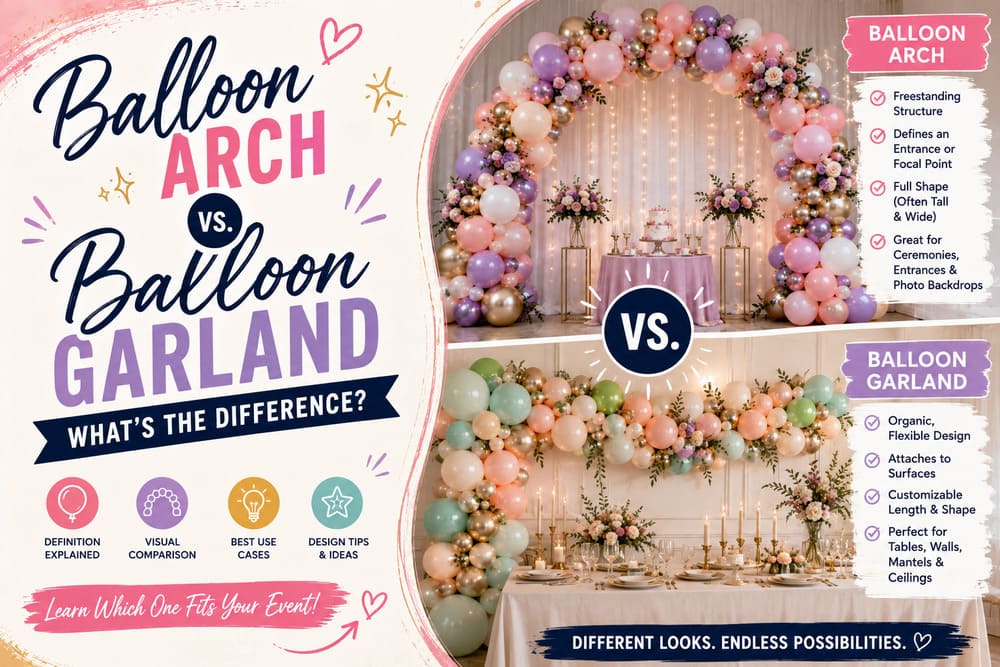
A balloon arch is a curved, freestanding structure built on a frame. A balloon garland is a flexible strand of balloons that can drape, wrap, or shape along almost any surface. An arch creates a defined doorway-style feature, usually placed at an entrance. A garland works more like a decorative ribbon — along a wall, a staircase, a table, or combined with a frame to build a fuller arch.
This guide compares the two structurally, visually, and by cost, then covers which one suits different events and venues across Toronto and the GTA.

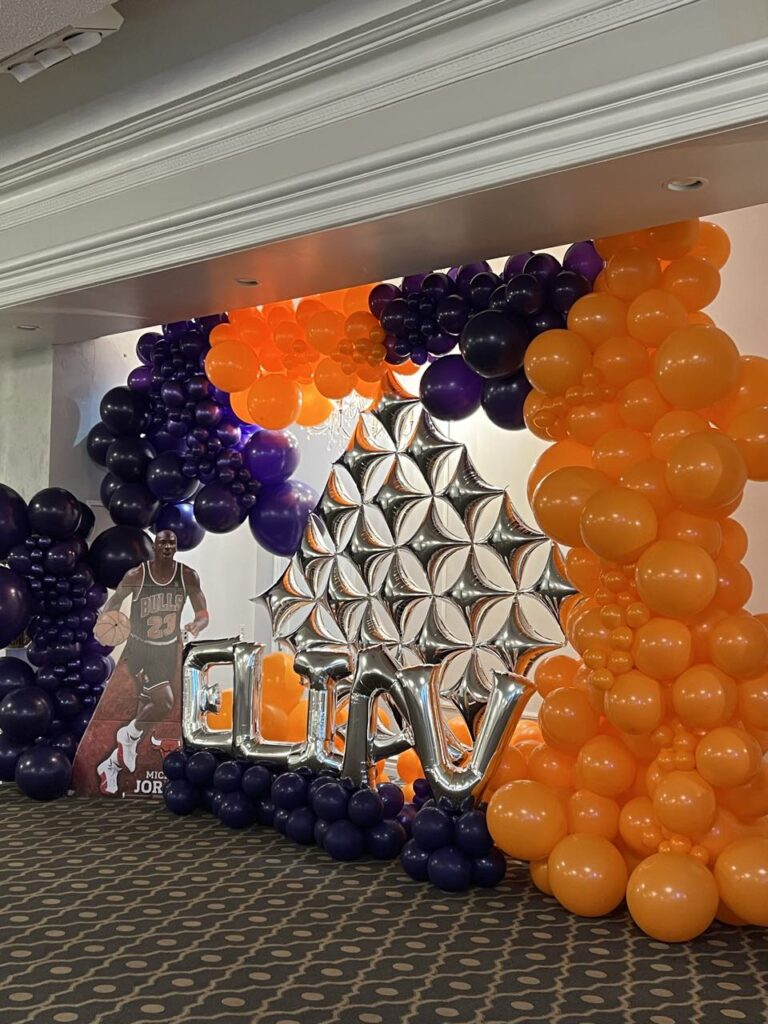
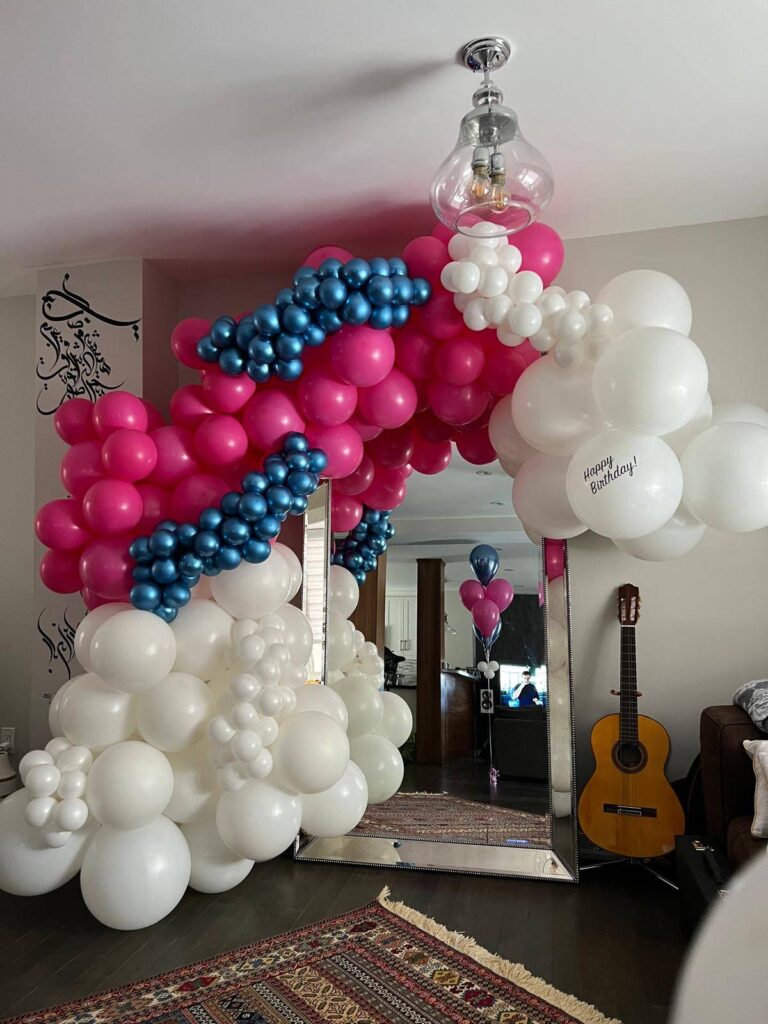
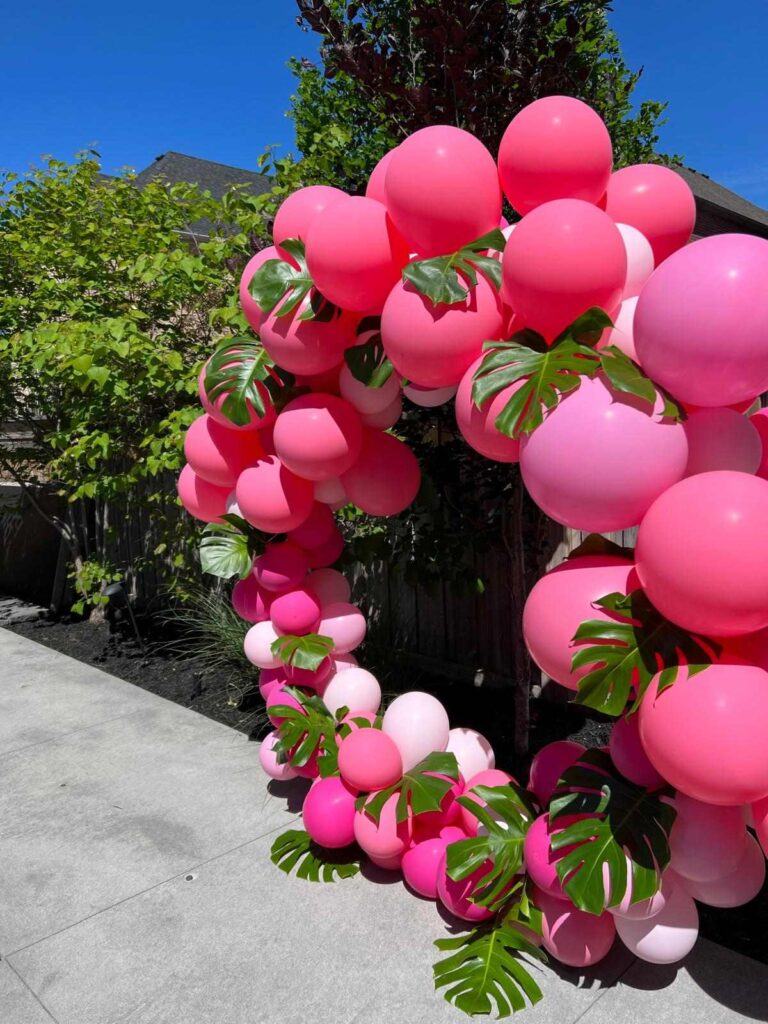
Quick Answer: The Core Difference
Structure sets the two apart. A frame — usually metal or PVC — holds a balloon arch in a curved or geometric shape, most often a doorway arc. A garland skips the frame entirely and works as a flexible strand you can attach, drape, or wrap along an existing surface. That single difference explains most of what follows: where each one fits, how each one costs, and which spaces suit which structure.
What Is a Balloon Arch?
An arch relies on a frame that holds its own shape without help from a wall or surface. Balloons attach directly to the frame in a set pattern, forming a curved or geometric structure that stands on its own. Arches typically frame a doorway, an entrance, or a specific focal point like a stage or photo area, and they read as a strong, symmetrical statement from a distance.
The frame gives an arch two practical advantages. It holds its exact shape reliably, and it moves as a complete unit if a venue needs the piece repositioned during setup.
What Is a Balloon Garland?
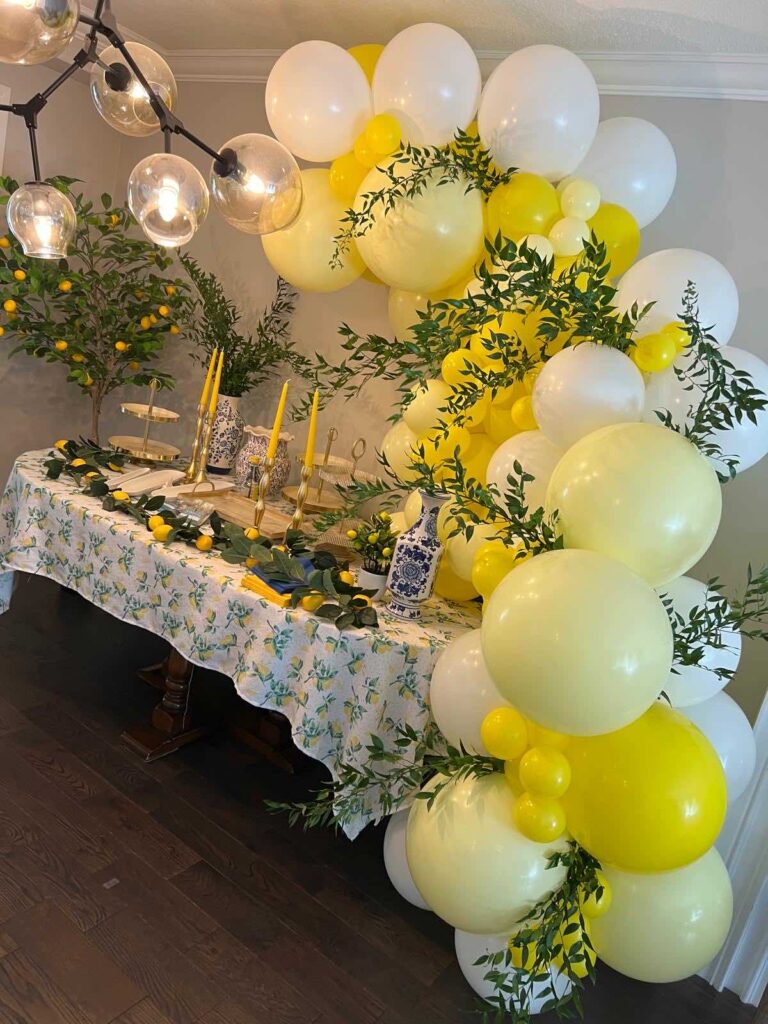
A garland has no rigid frame, so installers can shape and place it along almost any surface — a wall, a staircase railing, a table edge, a mantel, or draped loosely for a relaxed, organic look. Most garlands mix balloon sizes, and many add greenery or floral accents, which gives them a more textured, layered appearance than an arch’s cleaner, uniform look.
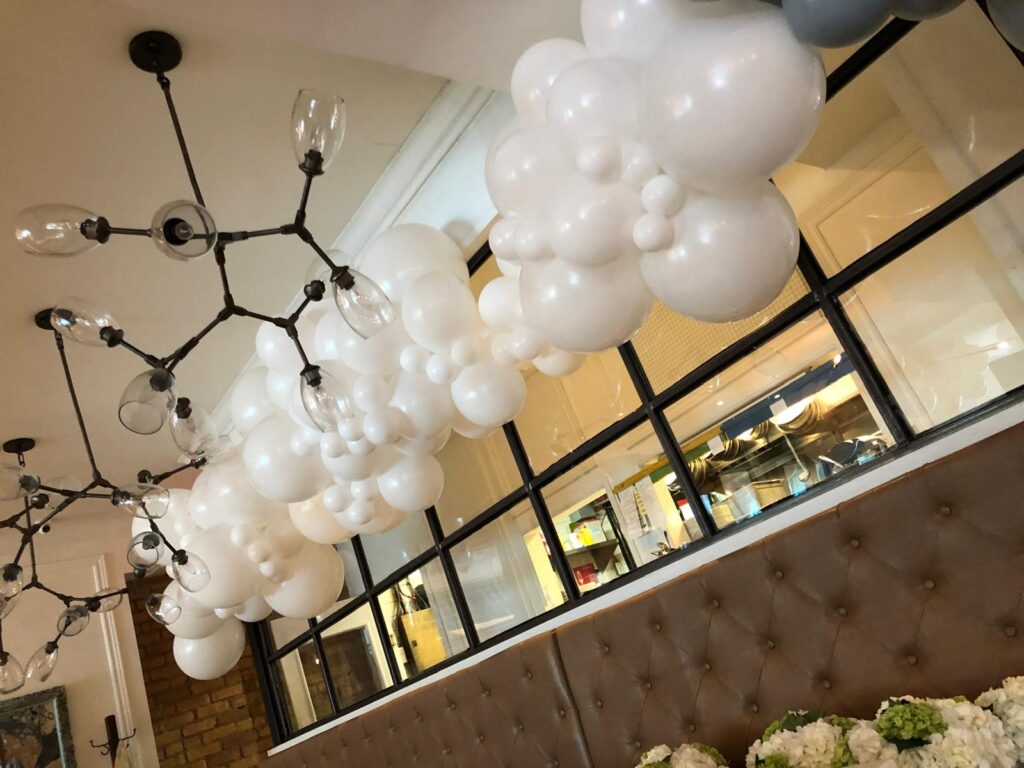
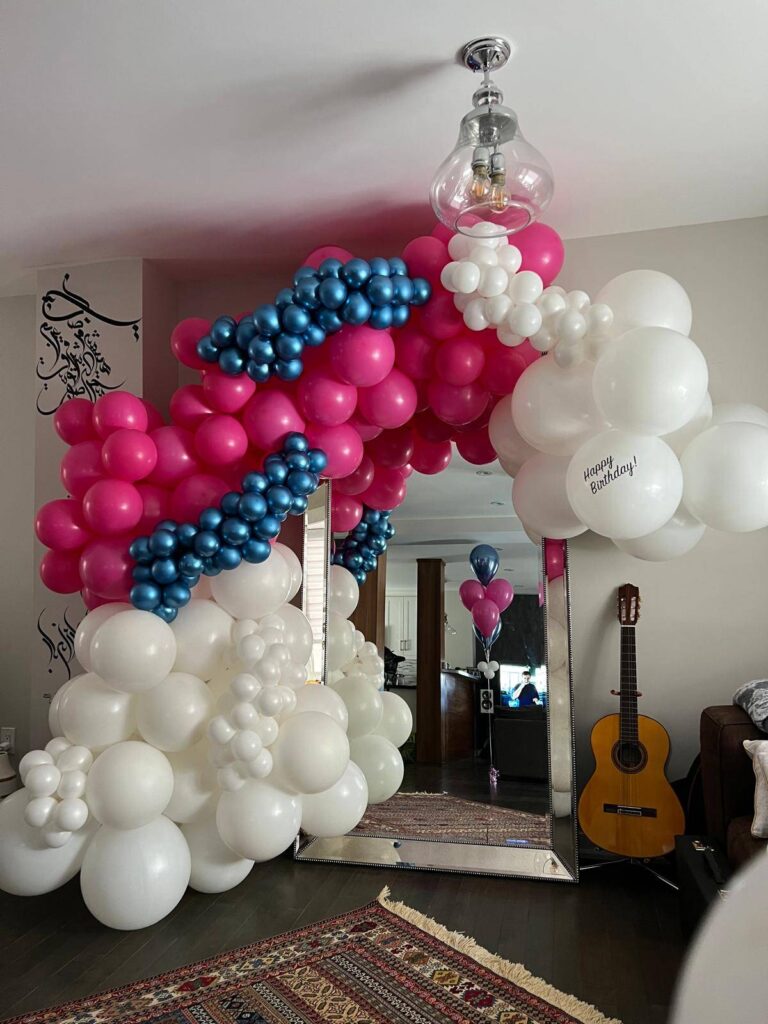
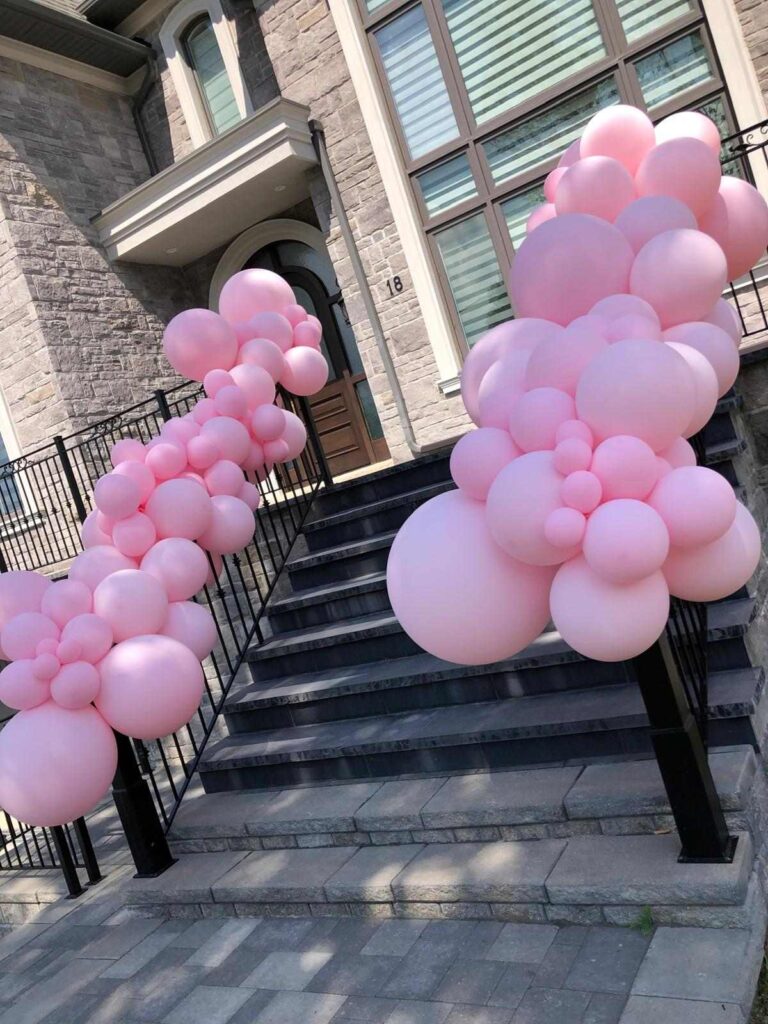
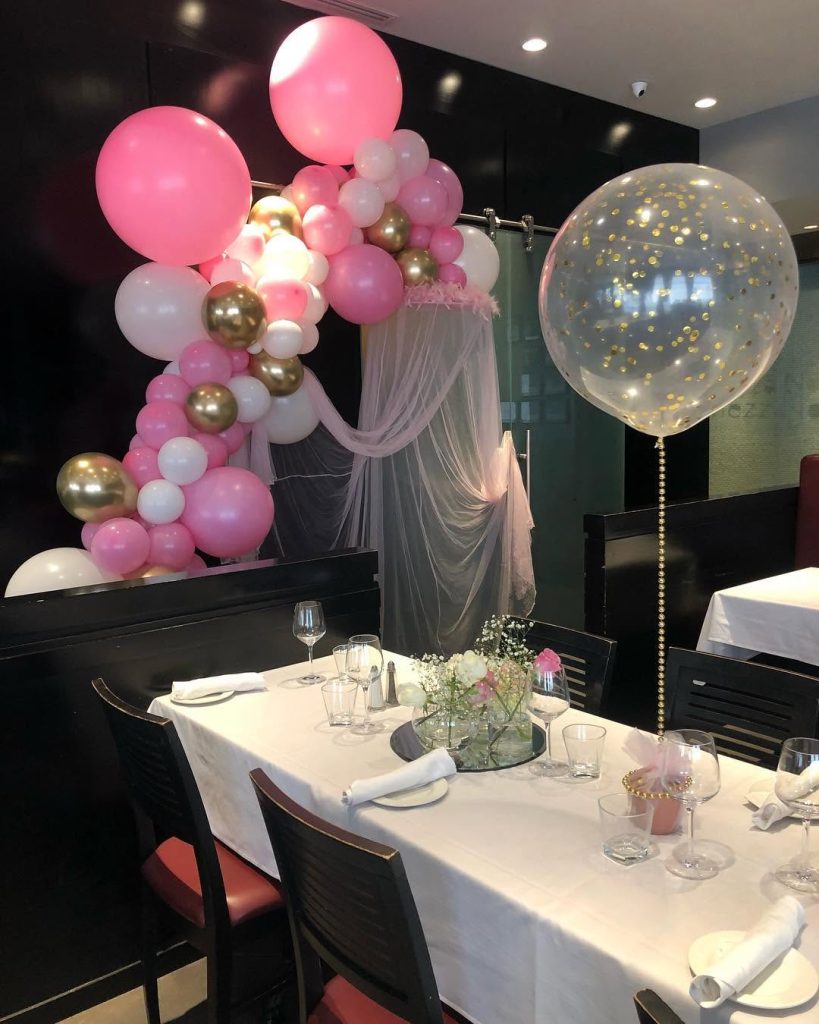
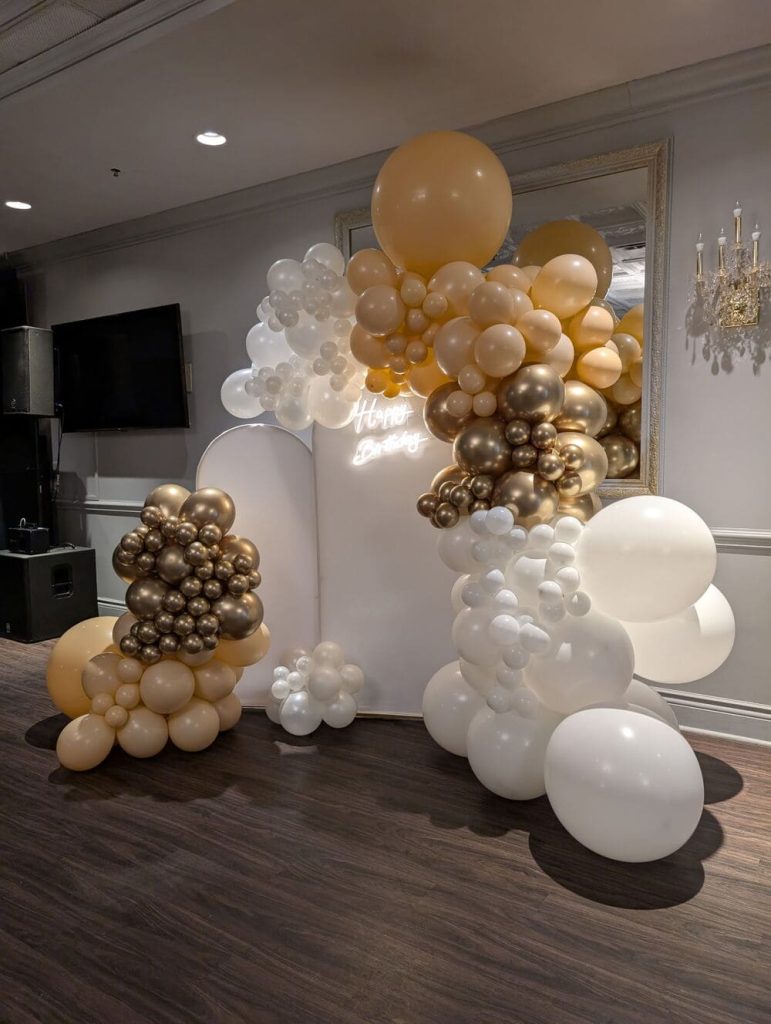
Without a frame, a garland adapts to spaces an arch can’t reach — wrapping a curved staircase, following the length of a long table, or draping asymmetrically for a softer style. This flexibility comes with a trade-off: the installer’s skill matters more, since no frame keeps the balloon spacing and colour flow consistent on its own.
Visual Differences at a Glance
| Factor | Balloon Arch | Balloon Garland |
|---|---|---|
| Shape | Fixed, symmetrical, usually a curved or geometric doorway shape | Flexible, follows the surface it’s placed on |
| Structure | Built on a frame | No frame required |
| Placement | Freestanding, usually at an entrance or as a standalone feature | Wraps, drapes, or attaches along walls, railings, tables, or furniture |
| Visual style | Clean, bold, symmetrical | Organic, layered, textured |
| Mobility | Moves as a complete unit | Usually installed in place, less portable once attached |
| Typical use | Entrance features, photo backdrops, stage frames | Staircases, tables, walls, mixed with florals, hybrid arch tops |
Structural Differences
A frame predetermines an arch’s final shape — round, square, geometric, or a custom form. That predictability makes an arch a reliable choice when an event needs a specific, symmetrical shape, such as a doorway entrance.
A garland’s final shape depends entirely on the surface it follows. Wrap it around a curved railing, run it along an irregular wall, or drape it loosely for a softer look an arch’s fixed frame can’t replicate.
Cost Differences
Garlands generally cost less than arches of a similar size, mainly because they skip the frame and the extra setup time a freestanding structure needs. An arch’s frame, base weights, and more involved installation process typically add to the total cost compared with a garland covering a similar length.
Tight budgets with a large area to cover — a long table, a staircase, a wall — usually get more visual coverage per dollar from a garland than from an arch over the same distance.
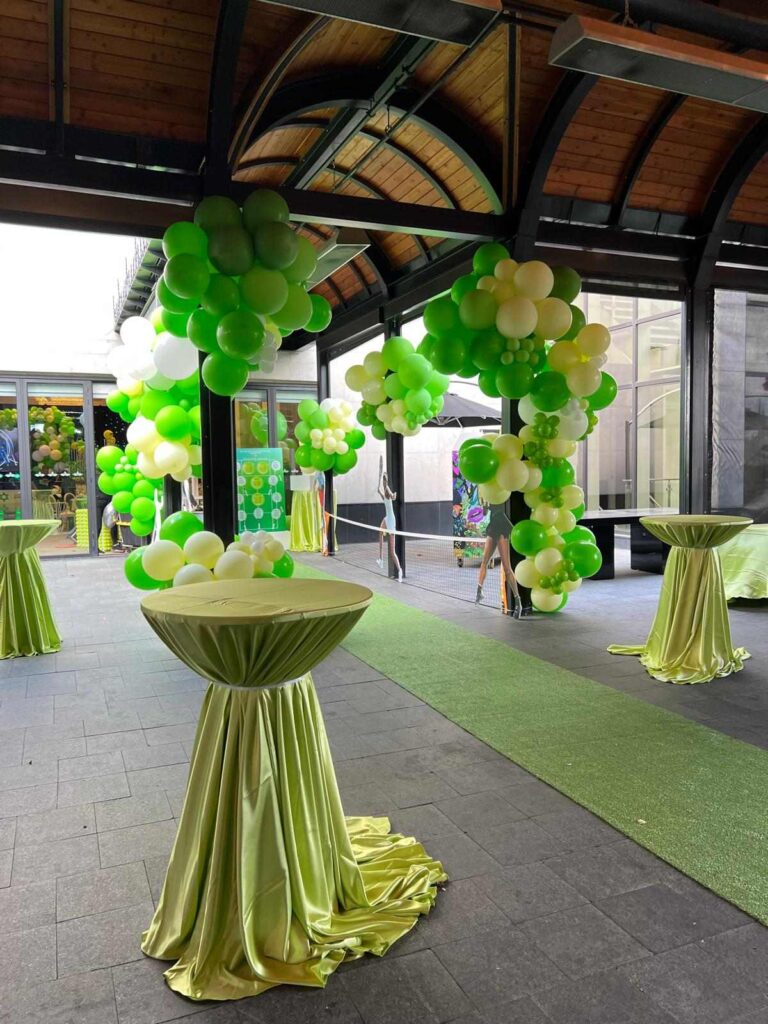
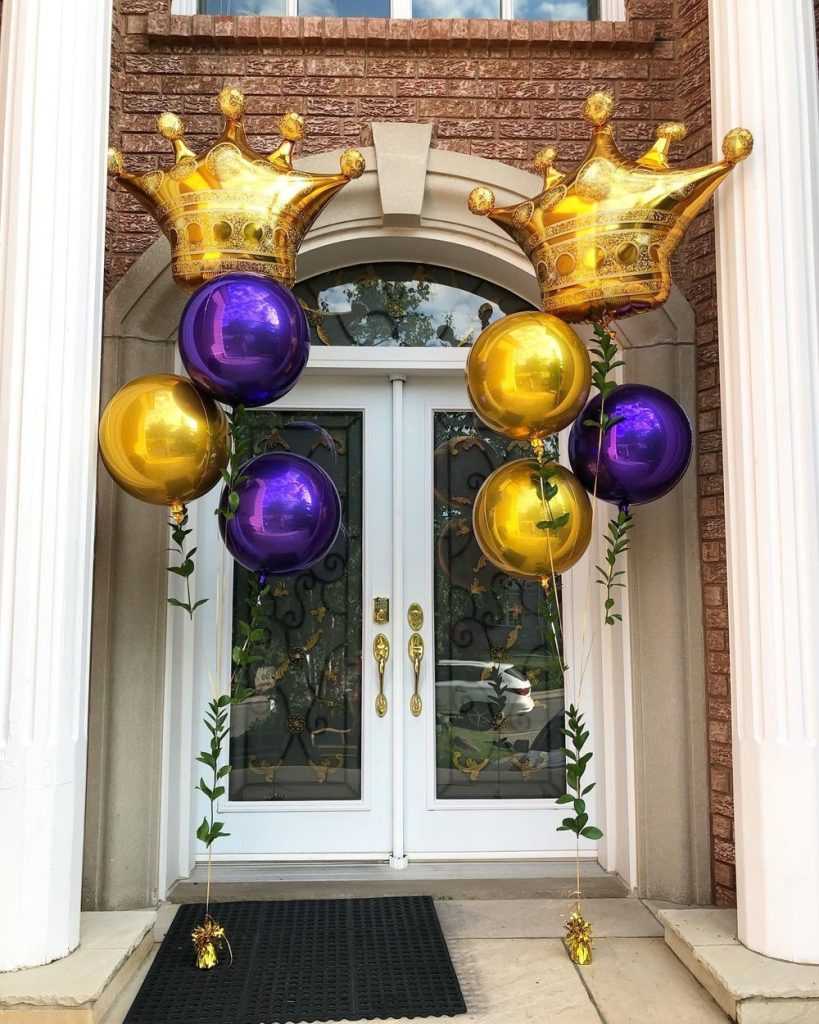
Best Uses for a Balloon Arch
- Entrance features — framing a doorway so every guest passes through or by it
- Photo backdrops — a symmetrical shape gives a clean, consistent frame for photos
- Stage or presentation backdrops — a strong, defined shape behind a speaker or head table
- Grand openings and launches — a bold, freestanding feature that draws attention from a distance. Our corporate event balloon service builds arches for exactly this kind of entrance moment.
Best Uses for a Balloon Garland
- Staircases and railings — following the natural curve or length of the structure
- Long tables — a low garland along the centre of a banquet or dining table
- Walls and feature walls — draped or arranged flat for full-coverage impact
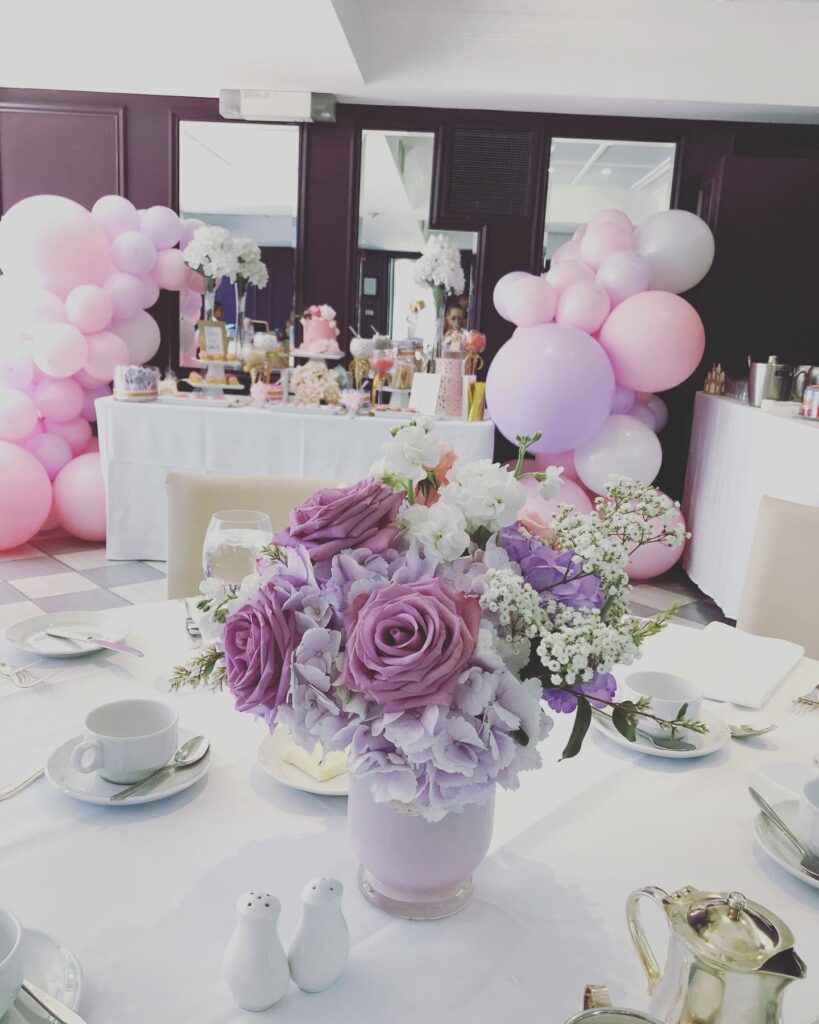
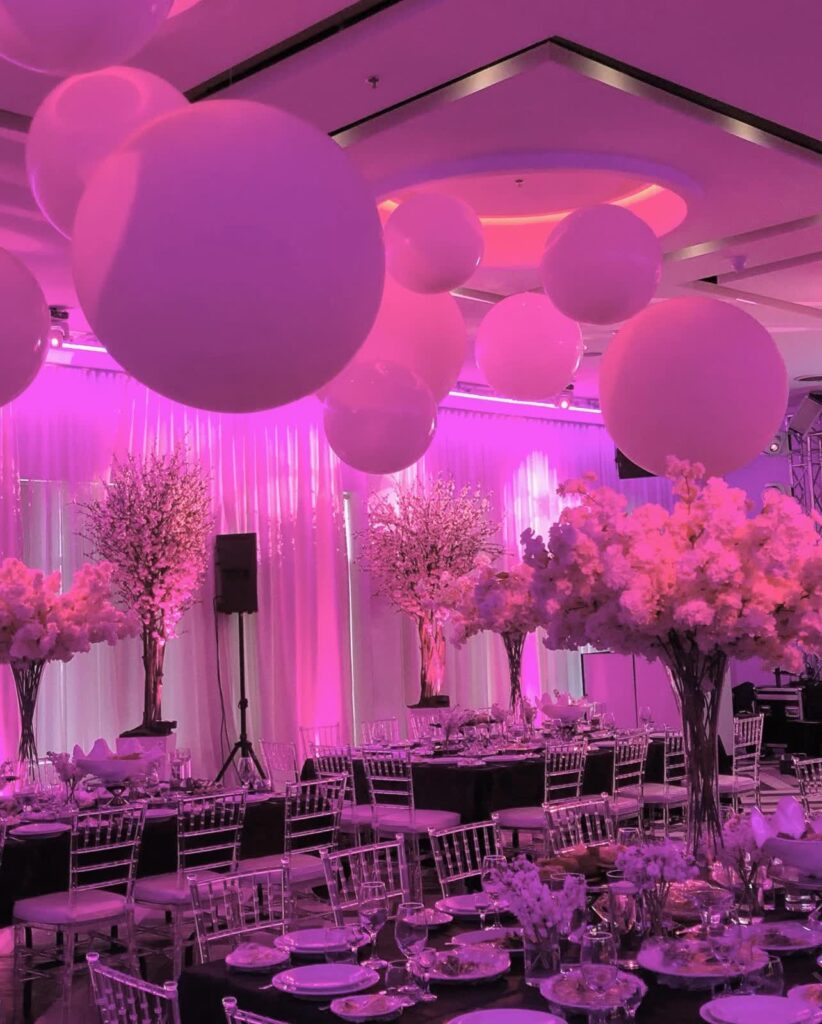
- Floral pairings — garlands blend naturally with fresh flowers for a softer style, which is exactly what our balloon and flower decoration service specializes in for weddings and upscale events
- Hybrid designs — many arches actually use garland technique wrapped around a frame, blending both styles into one structure



Indoor vs. Outdoor Suitability
Both structures work indoors and outdoors, though each handles outdoor conditions a little differently. A weighted, well-secured arch base holds up reasonably well against wind. A loosely draped garland can shift or sag more easily outdoors, since it lacks a rigid structure holding its shape.
For any outdoor event, securing the structure properly — a weighted base for an arch, firm attachment points for a garland — matters more than which style you choose. Neither one lasts as long outdoors as it does indoors.
Which One Fits Different Venues Across Toronto and the GTA
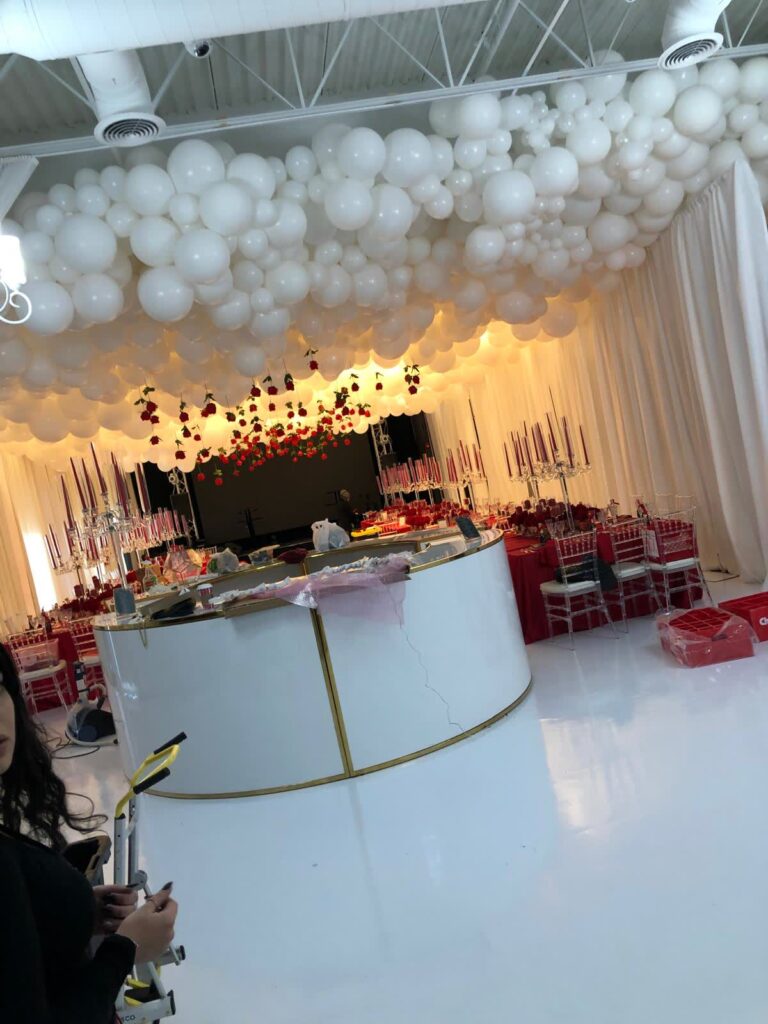
Venue and available space often decide the answer, and that varies across the GTA. Downtown Toronto restaurants and event spaces with narrow entrances or limited floor space usually suit a compact arch at the door or a garland along an existing feature wall, since both work within tighter square footage. North York condo party rooms and mid-size venues benefit from freestanding garlands or arches that skip wall attachment entirely, given typical building rules around drilling and tape.
Vaughan and Woodbridge banquet halls have the ceiling height and floor space for a full entrance arch paired with a garland along the head table or dessert area. Richmond Hill home parties and backyard events often use a garland along a deck railing or fence line, paired with a smaller arch at the yard entrance. King City and Kleinburg estate properties and outdoor venues frequently support bigger, more dramatic arches at a driveway or entrance, since these spaces have room for a taller, more prominent structure. Wedding receptions in any of these areas often pair an entrance arch with garland accents through the reception space, a combination our wedding balloon decor service builds regularly.

Can You Combine an Arch and a Garland?
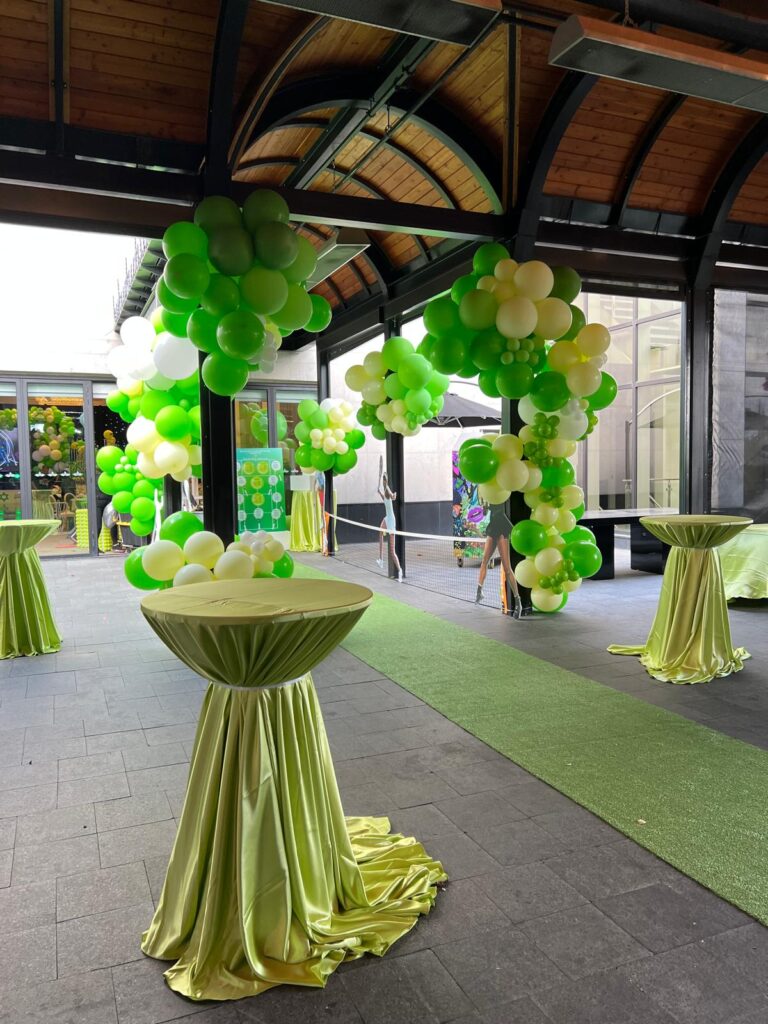
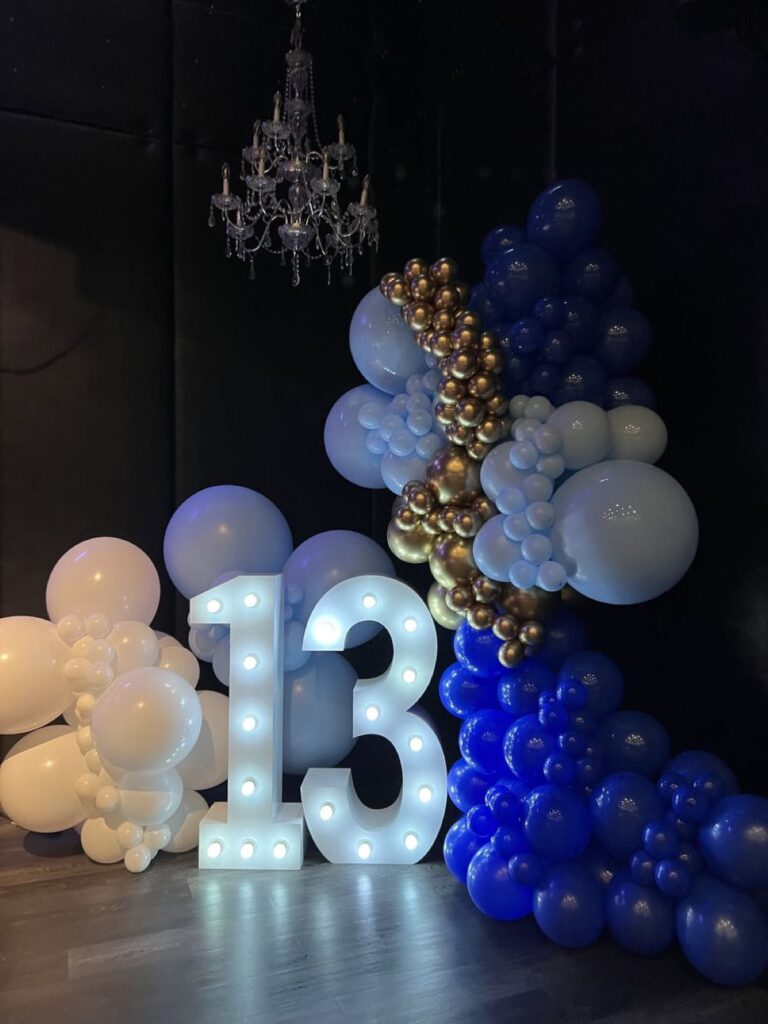
Yes, and larger events do this often. Builders frequently use garland technique to construct the arch itself, which gives it a fuller, more organic look than a simple frame with evenly spaced balloons. An entrance arch paired with a garland along a head table, staircase, or dessert area also creates a connected design that carries the same colour palette through the venue, without repeating an identical structure everywhere.
Which One Photographs Better?
Both photograph well, but they create different effects. An arch’s symmetry gives photographers a natural frame — guests standing under or in front of it get a clean, centred composition, which works especially well for posed group shots. A garland photographs better as a background element or a detail shot, since its texture and flow read well up close but don’t offer the same built-in framing for posed photos.
Planning a dedicated photo area — a step-and-repeat spot, a formal portrait area — usually calls for an arch or a backdrop over a garland alone. For candid photos throughout an event, a garland along a wall or staircase adds a decorative background without asking guests to stand in a specific spot.
Maintenance and Lifespan Differences
An arch and a garland built from the same balloon quality tend to share a similar overall lifespan, since the balloons themselves — not the frame or lack of one — determine how long the colour and shape hold up. The frame does create one practical difference during the event: replacing a single balloon on an arch is usually quicker, since the frame keeps the overall shape intact while a balloon gets swapped out.
A garland without a frame takes slightly more care to touch up. A deflated or faded balloon within a tightly woven strand sometimes needs neighbouring balloons adjusted to keep the shape looking even. This matters little for most single-day events, but it’s worth knowing for multi-day installations where a mid-event refresh might come up.
Which One Suits Different Event Types?
Event type often points toward one structure before venue or budget even come into play. Birthdays and grand openings tend to favour an arch, since the bold, symmetrical shape suits high-energy celebrations and works well as a photo moment. Weddings and engagement parties often lean toward a garland, or a garland-built arch, since the softer, textured look pairs naturally with floral accents. Corporate launches usually call for an arch at the entrance, since a clean, branded frame photographs well for press or social media coverage. Baby showers and bridal showers commonly use a mix — a compact arch as the main feature, paired with garland accents around the dessert table or gift area.
None of these pairings are fixed rules. A wedding can absolutely use a bold arch, and a birthday can use a soft, organic garland. Matching the structure to the event’s general tone is a starting point, not a requirement.
Common Mistakes When Choosing Between the Two
- Fitting an arch into a space too narrow for it, which crowds a small entrance or doorway
- Using a garland where a defined, symmetrical shape was actually needed, such as a doorway feature meant to frame guests walking through
- Underestimating how much a garland needs a surface to follow, since garlands generally need a wall, railing, or table edge rather than open floor space
- Overlooking outdoor wind conditions for either structure, which can affect an unsecured garland or an improperly weighted arch base
Planning Checklist
- Measure the space — a doorway width for an arch, or a wall, railing, or table length for a garland
- Decide whether the design needs a fixed, symmetrical shape or a flexible, surface-following one
- Confirm the venue’s rules on wall attachment if a garland needs securing in place
- For outdoor installations, confirm how the structure will be secured against wind
- Consider combining both — an arch at the entrance with a garland elsewhere — for a connected design through the venue
- Factor in whether the event is single-day or multi-day, since touch-up needs differ slightly between the two structures
FAQ
Structure and Style
What’s the main difference between a balloon arch and a balloon garland? An arch is built on a frame and holds a fixed, usually symmetrical shape, most often a doorway curve. A garland has no frame and follows whatever surface it’s attached to, which makes it more flexible in shape and placement.
Which one looks more elegant, an arch or a garland? Neither is inherently more elegant — the style and colours used decide that. A softer, organic garland with floral accents often reads as more elegant for weddings, while a clean, symmetrical arch suits bold, graphic styles like corporate branding or birthday celebrations.
Can a balloon arch be built using garland technique? Yes. Many arches wrap a garland-style cluster of balloons around a frame, which gives the finished piece a fuller, more textured look than a simpler, evenly spaced design.
Cost and Practicality
Is a balloon garland cheaper than a balloon arch? Generally yes, mainly because a garland skips the frame and the extra setup a freestanding structure needs. Covering a similar length, a garland usually costs less than an arch.
Which one works better outdoors, an arch or a garland? Both work outdoors when properly secured — a weighted base for an arch, firm attachment points for a garland. An arch’s frame gives it slightly more stability against wind on its own, but neither structure holds up as long outdoors as it does indoors.
Is one option easier to maintain than the other during a long event? An arch’s frame usually makes touch-ups quicker, since swapping a single balloon doesn’t disturb the overall shape. A garland can take a bit more care to refresh, since a tightly woven strand sometimes needs neighbouring balloons adjusted when one gets replaced.
Choosing the Right Option
Should I choose an arch or a garland for my entrance? An arch generally works better for framing a doorway or entrance, since its fixed shape creates a clear passage guests walk through. A garland works well along a nearby wall or railing instead, or combined with a smaller arch for a layered look.
Does the choice between an arch and a garland depend on the size of the venue? It can. Smaller entrances and tighter spaces often suit a compact arch or a garland along an existing wall better than a large freestanding structure. Bigger venues with more open floor space can support a larger arch alongside a garland running through additional areas of the room.
Can an arch and a garland work together in the same event? Yes, and it’s a common approach for larger events. An entrance arch paired with a garland along a head table, staircase, or dessert area keeps the same colour palette connected throughout the venue, without repeating the same structure everywhere. This pairing works particularly well for weddings, milestone birthdays, and multi-zone venues like banquet halls.
Happy Day Toronto builds custom balloon arches and garlands for events across Toronto, North York, Vaughan, Richmond Hill, King City, Kleinburg, and Woodbridge. Request a quote or explore our balloon arch and garland service.
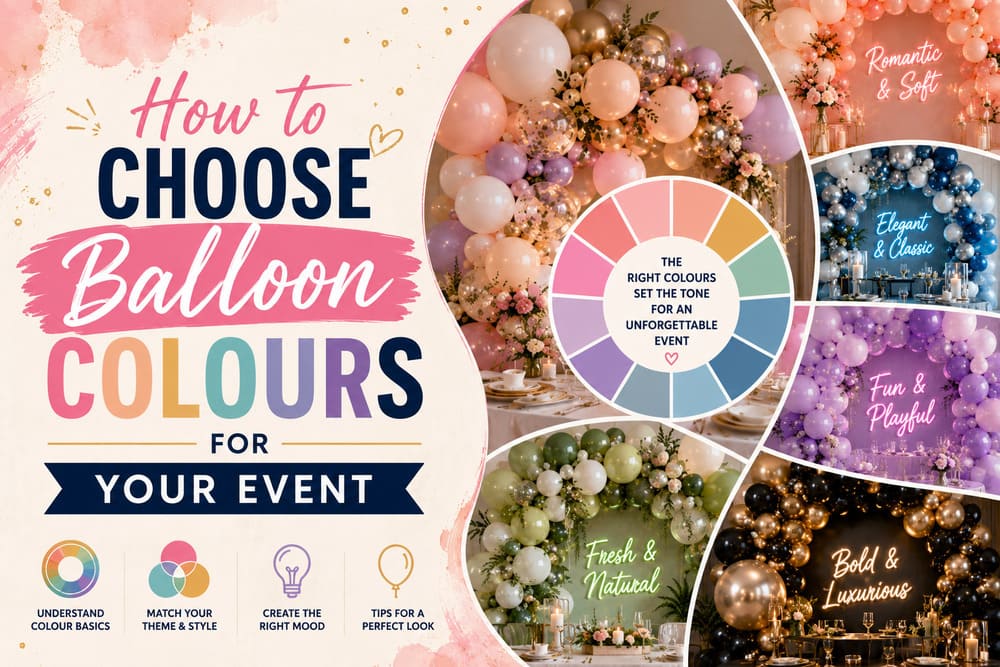
How to Choose Balloon Colours for Your Event
The easiest way to choose balloon colours is to start with two or three shades — one main colour, one accent, and…